

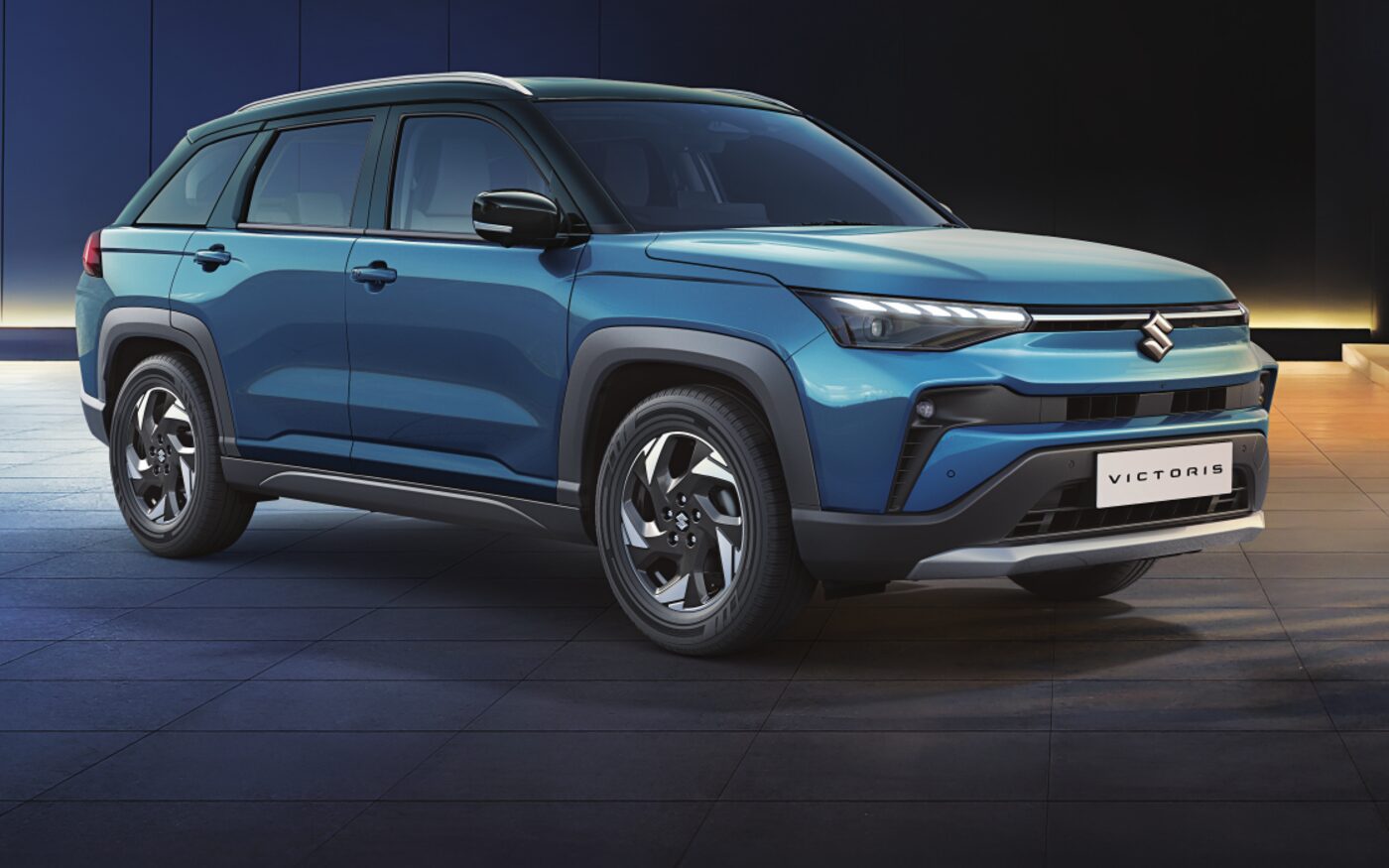
Maruti Victoris: the most complicated car Maruti has ever sold
Twenty-one variants, three powertrains, all-wheel drive, ADAS and a strong hybrid — from ₹10.50 lakh to ₹19.99 lakh. Maruti has built a Creta rival and priced it like one.
- Ex-showroom
- ₹10.50 – 19.99 L
- Powertrains
- Petrol, CNG, strong hybrid
- Petrol output
- 103 PS / 139 Nm
- Wheelbase
- 2,600 mm
- Aug 2026 sales
- 12,978 — rank 12
What is good
- 2,600 mm wheelbase — longer than a Creta or a Seltos, and you feel it in the back
- A real strong hybrid with an eCVT, not a mild-hybrid badge
- AllGrip all-wheel drive is offered, which almost nothing else at this price does
What is not
- The 1.5 petrol makes 103 PS and 139 Nm at 4,300 rpm — modest for a 4,360 mm SUV
- Twenty-one variants spanning ₹9.5 lakh makes honest comparison hard
- Top strong-hybrid trims at ₹19.99 lakh are past a well-equipped Creta or Seltos
What Maruti has actually built
The Victoris is 4,360 mm long on a 2,600 mm wheelbase, 1,795 mm wide and 1,655 mm tall. That wheelbase is the headline: a Hyundai Creta sits on 2,610 mm and a Kia Seltos on similar, so the Victoris is playing in that class rather than below it.
It sold 12,978 units in August 2026, twelfth in the country, in what is effectively its first full year. That is a strong start for a new nameplate.
The range covers three powertrains and two drivetrains, which is unusual for Maruti — the company built its reputation on simple, cheap, reliable cars, and this is none of those things in the way the Alto was.
Three powertrains, honestly compared
The K15C petrol makes 75.8 kW — 103.06 PS — at 6,000 rpm with 139 Nm at 4,300 rpm, through a five-speed manual or a six-speed automatic. It claims 21.18 km/l on the manual. It is smooth and it is not fast; 139 Nm arriving at 4,300 rpm means downshifting to overtake with the car loaded.
The CNG runs the same engine bi-fuel, dropping to 87.8 PS and 121.5 Nm in gas mode, for a claimed 27.02 km/kg. The cylinder is 55 litres water-equivalent.
The 1.5 M15D strong hybrid with an eCVT is the interesting one. This is a full hybrid that can move on electricity alone, not a mild-hybrid starter-generator with a badge. It is the smoothest way to drive this car and the cheapest to run — and it is where the money goes.
AllGrip all-wheel drive is offered on the ZXI+ automatic, claiming 19.07 km/l. At this price, genuine all-wheel drive is close to unique.
| Spec | 1.5 petrol | 1.5 CNG | 1.5 strong hybrid |
|---|---|---|---|
| Max power | 103.06 PS @ 6,000 rpm | 87.8 PS @ 5,500 rpm (CNG mode) | 1.5 M15D with eCVT |
| Max torque | 139 Nm @ 4,300 rpm | 121.5 Nm @ 4,200 rpm | Electric assist from rest |
| Claimed economy | 21.18 km/l (MT) | 27.02 km/kg | Maruti's highest in the range |
| Opens atour pick | ₹10,49,900 | ₹11,54,900 | ₹16,42,900 |
Figures from Maruti Suzuki's official Victoris brochure dated 6 August 2026. Maruti does not publish separate power figures for the strong hybrid system in the brochure's specification table.
Twenty-one variants, and where to get off
LXI at ₹10,49,900 is the entry car and very few people should buy it. VXI at ₹11,84,900 is the first sensible rung.
ZXI at ₹13,77,300 is where we would stop for most buyers. Note the (O) variants alongside it — ZXI (O) is ₹7,100 more, which is small enough that if the equipment suits you, take it.
Above that the range forks. ZXI+ MT at ₹15,54,300 and the ADAS automatics at ₹17,49,300 climb steeply. The strong hybrids start at ₹16,42,900 for the VXI THS and run to ₹19,98,900.
That ₹19,98,900 figure deserves a pause. It is twenty lakh for a Maruti, and it is more than a well-equipped Creta or Seltos. The hybrid earns some of that back in fuel over years — but you should do that sum with your own annual kilometres, not accept it as a given.
| Variant | Powertrain | Ex-showroom |
|---|---|---|
| LXI MT | Petrol | ₹10,49,900 |
| LXI CNG MT | CNG | ₹11,54,900 |
| VXI MT | Petrol | ₹11,84,900 |
| VXI CNG MT | CNG | ₹12,89,900 |
| VXI AT | Petrol | ₹13,40,900 |
| ZXI MTour pick | Petrol | ₹13,77,300 |
| ZXI (O) MT | Petrol | ₹13,84,400 |
| ZXI CNG MT | CNG | ₹14,82,300 |
| ZXI AT | Petrol | ₹15,33,300 |
| ZXI+ MT | Petrol | ₹15,54,300 |
| VXI THS | Strong hybrid | ₹16,42,900 |
| ZXI+ AT ADAS | Petrol | ₹17,49,300 |
| ZXI strong hybrid | Strong hybrid | ₹18,00,300 |
| ZXI+ AT AllGrip | Petrol AWD | ₹18,84,300 |
| ZXI+ strong hybrid | Strong hybrid | ₹19,67,300 |
| ZXI+ (O) strong hybrid | Strong hybrid | ₹19,98,900 |
Ex-showroom, read from Maruti Suzuki's own price page on 29 September 2026. A few near-identical (O) trims are folded into the closest listed variant. Prices vary by state — confirm yours before you sign.
Is the hybrid worth ₹4.2 lakh
ZXI petrol manual is ₹13,77,300. ZXI strong hybrid is ₹18,00,300. That is ₹4,23,000 between them.
Here is the arithmetic nobody does at the showroom. At roughly ₹100 a litre and 21 km/l, the petrol costs about ₹4.76 per kilometre. A strong hybrid in city use realistically returns somewhere near 27–28 km/l, so call it ₹3.60. That is ₹1.16 saved per kilometre.
₹4,23,000 divided by ₹1.16 is about 3.6 lakh kilometres. Even at 15,000 km a year, that is well past twenty years.
So buy the hybrid because it is smoother, quieter and nicer to drive in traffic — those are real and worth paying for. Do not buy it because it will pay for itself in fuel, because on these numbers it will not.
What we would tell a friend
Buy the ZXI MT at ₹13,77,300, or the ZXI (O) at ₹13,84,400 if its equipment suits you. That is the Victoris doing what most people need at a price that still makes sense against its rivals.
If you want the hybrid, want it for how it drives. It is genuinely the better car in traffic and the numbers on fuel will not repay the premium in any realistic ownership period.
And if you are being walked to the top of the range at twenty lakh, put a Creta and a Seltos on the same shortlist that afternoon. The Victoris is a good car. At that price it is no longer the obvious one.
Want this for your shortlist?
We will go through your options and tell you which one we would buy, and what to skip.
Talk to an expertRead next
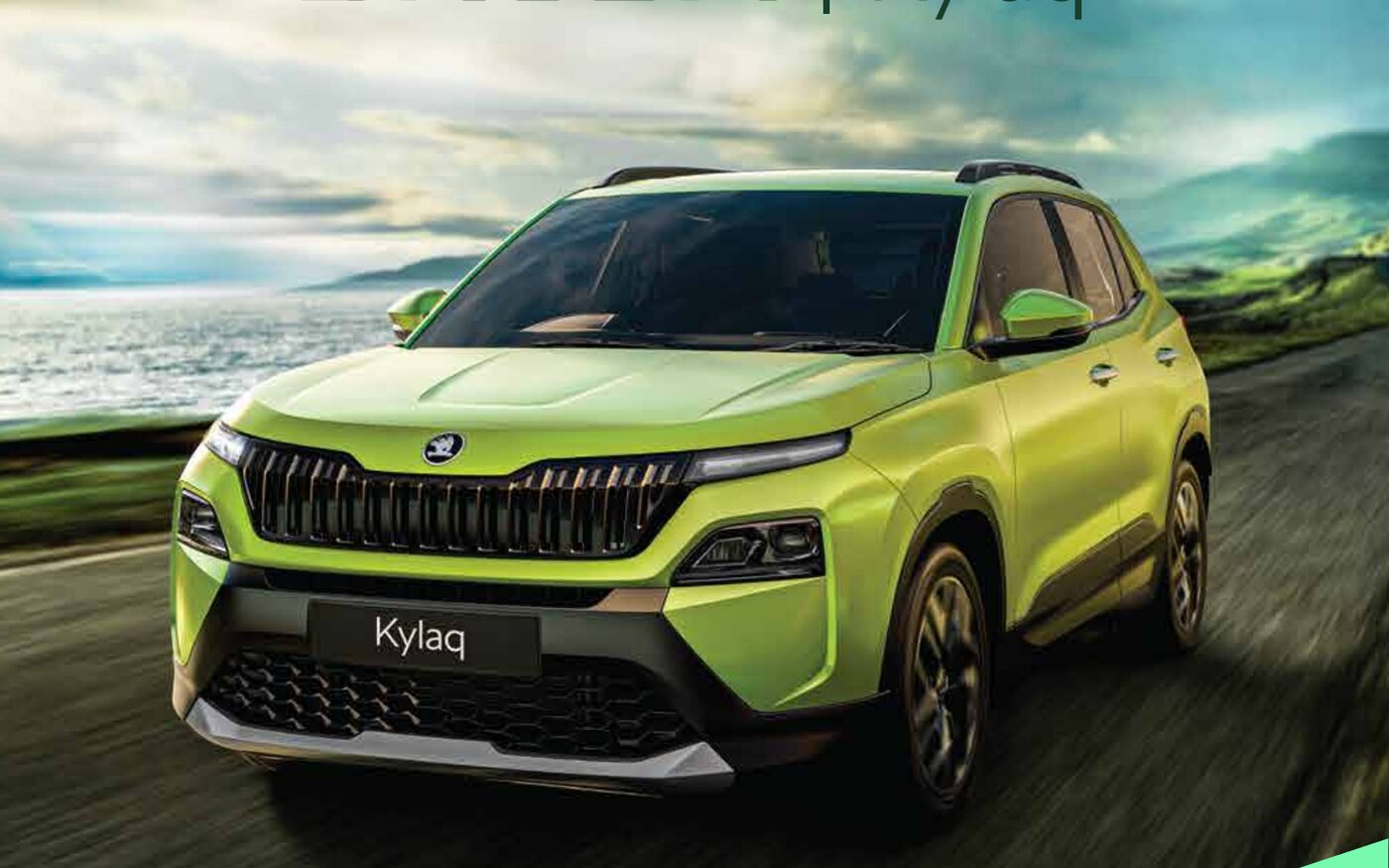
Skoda Kylaq: every variant gets the same 115 PS turbo
₹7.59 lakh buys the same 115 PS turbo fitted to the ₹12.75 lakh car. That is the opposite of how Indian ranges usually work, and it changes which variant you should be looking at.

Mahindra Thar OG: 330 Nm, two doors you will regret, and no apology for either
The September 2026 facelift keeps everything that makes the Thar sell and everything that makes it impractical. If you are buying one as a family car, read the rear-seat paragraph twice.