

Maruti Brezza: the cheapest one in the range is now the turbo
The new 1.0 Boosterjet makes more power and far more torque than the 1.5 it sits below — and costs ₹85,000 less. That inverts the usual advice about entry variants.
- Ex-showroom
- ₹7.50 – 13.71 L
- Engines
- 1.0 turbo, 1.5 petrol, 1.5 CNG
- Turbo output
- 110 PS / 170 Nm
- 1.5 output
- 103 PS / 139 Nm
- Aug 2026 sales
- 15,288 — rank 11
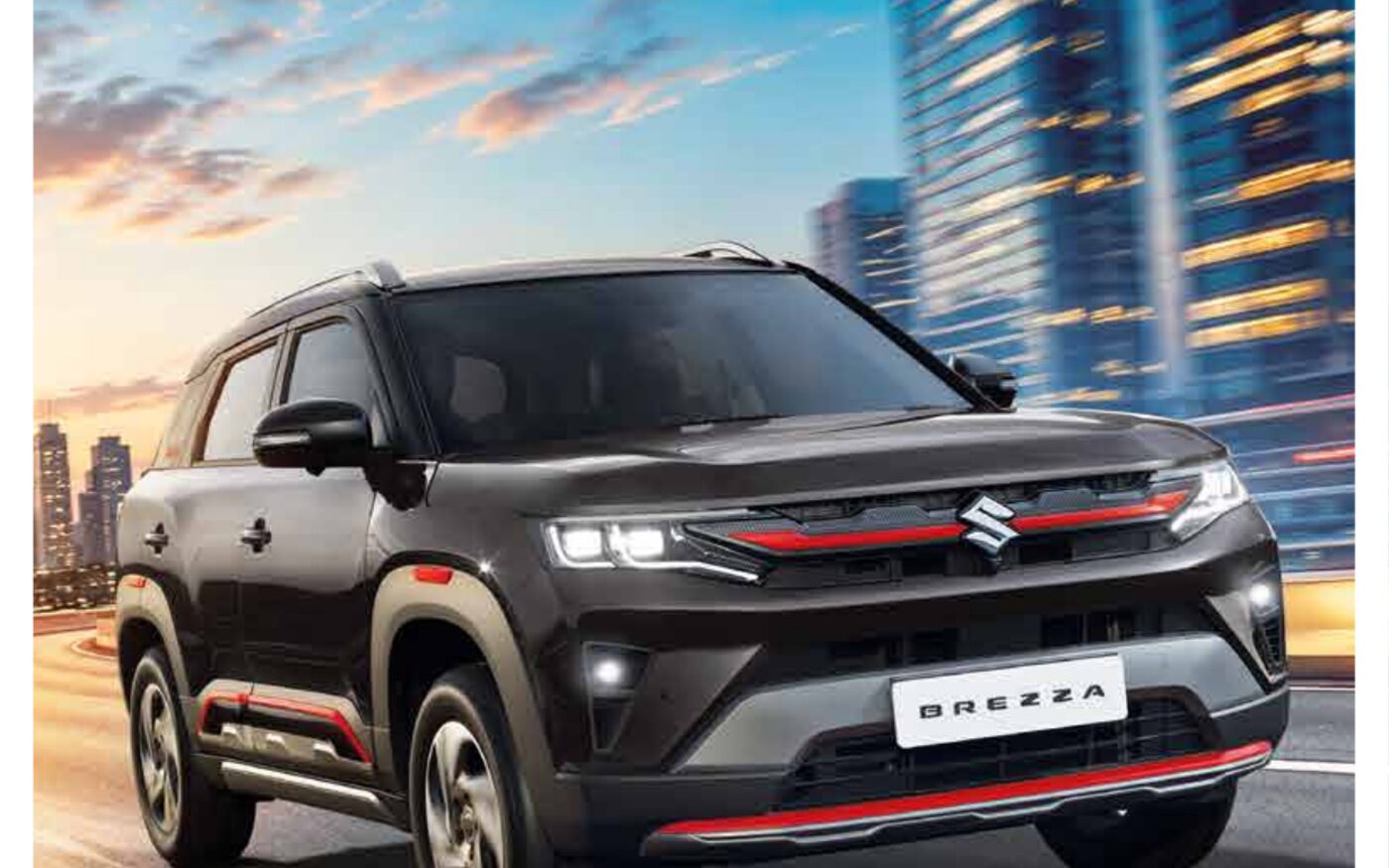
What is good
- 1.0 turbo makes 170 Nm from 2,000 rpm — 31 Nm more than the 1.5, and 2,400 rpm earlier
- Turbo variants undercut the equivalent 1.5 by ₹85,000 to ₹95,600
- Six airbags, ESP and hill hold across the range
What is not
- The turbo is manual only — if you want an automatic you are pushed onto the 1.5 and its 6AT
- ZXI+ Turbo at ₹11.41 lakh is close to Grand Vitara and Creta entry money
- Rear brakes are drums on every variant
What actually changed
The Brezza now runs three powertrains: a 998 cc K10C DiTC turbo petrol, the familiar 1,462 cc K15C naturally aspirated petrol, and the K15C in bi-fuel CNG form. All three are mild hybrids on the petrol side, all three sit on the same 3,995 mm body with a 2,500 mm wheelbase.
The interesting part is not that a turbo exists. It is where Maruti has priced it. The 1.0 turbo is the entry engine, not the range-topper, which is the opposite of how almost every other manufacturer in India positions a boosted motor.
The engine comparison nobody expects
Set the two petrol engines side by side and the smaller one wins on paper in every measure that matters to how the car feels.
The 170 Nm figure is the one to hold on to. It arrives at 2,000 rpm and holds to 3,500 rpm, which is the band you actually drive in. The 1.5 needs 4,400 rpm before it produces its 139 Nm — that means downshifting to overtake, and it means working the engine when the car is full.
The catch is the gearbox. The turbo comes with a six-speed manual and nothing else. If you want two pedals, the 1.5 and its six-speed automatic is the only route, and you pay for it.
| Spec | 1.0 Turbo Boosterjet | 1.5 K15C |
|---|---|---|
| Capacity | 998 cc | 1,462 cc |
| Max power | 110.12 PS @ 5,500 rpm | 103.05 PS @ 6,000 rpm |
| Max torqueour pick | 170 Nm @ 2,000–3,500 rpm | 139 Nm @ 4,400 rpm |
| Gearbox | 6-speed manual | 6-speed manual or 6AT |
| Opens atour pick | ₹7,49,900 | ₹8,34,900 |
Outputs from the official Maruti Suzuki Brezza brochure dated 27 July 2026. Prices ex-showroom Delhi, effective 24 July 2026.
What each step costs
Read the ladder as steps rather than as a list. The turbo and the 1.5 run as two parallel ranges, and at every rung the turbo is cheaper than the naturally aspirated car with the same trim name.
LXI Turbo to VXI Turbo is ₹1,15,000 and it is the step that matters most — it is the jump out of the entry car. ZXI Turbo adds the sunroof, the bigger screen and the alloys for ₹1,44,100 more. ZXI+ Turbo at ₹11,41,500 brings the 360-degree camera and ventilated seats, but by then you are shopping against larger cars.
The CNG deserves a note of its own. It is offered only on the 1.5 and only with a manual, and it drops to 87.8 PS and 121.5 Nm in gas mode. If your case for CNG is running cost rather than performance, that trade is the point — but check the 55-litre water-equivalent cylinder against your boot needs first.
| Variant | Engine | Ex-showroom |
|---|---|---|
| LXI Turbo MT | 1.0 turbo | ₹7,49,900 |
| LXI MT | 1.5 petrol | ₹8,34,900 |
| VXI Turbo MTour pick | 1.0 turbo | ₹8,64,900 |
| VXI MT | 1.5 petrol | ₹9,30,900 |
| LXI CNG MT | 1.5 CNG | ₹9,39,900 |
| VXI CNG MT | 1.5 CNG | ₹9,99,000 |
| ZXI Turbo MT | 1.0 turbo | ₹10,09,000 |
| VXI AT | 1.5 petrol | ₹10,60,900 |
| ZXI MT | 1.5 petrol | ₹10,70,500 |
| ZXI+ Turbo MT | 1.0 turbo | ₹11,41,500 |
| ZXI CNG MT | 1.5 CNG | ₹11,75,500 |
| ZXI AT | 1.5 petrol | ₹12,00,500 |
| ZXI+ AT | 1.5 petrol | ₹13,70,500 |
Ex-showroom Delhi, effective 24 July 2026, read from Maruti Suzuki’s own price page on 28 September 2026. Prices vary by state — confirm yours before you sign.
Who should still buy the 1.5
Two groups. If you want an automatic, the turbo does not offer one and the argument ends there — the 1.5 with the six-speed torque converter is a genuinely good combination, and ₹10,60,900 for the VXI AT is not unreasonable.
The second group is anyone who keeps cars for a decade and is uneasy about a small-capacity three-cylinder turbo carrying a heavy SUV body. That is a reasonable instinct, though a Boosterjet with a timing chain and Maruti's service network behind it is not a risky engine by any measure we can point to.
Everyone else is better off with the turbo, and the money saved is not small.
What we would tell a friend
Buy the VXI Turbo. It is ₹8,64,900, it has the equipment you touch every day, and it is quicker than the 1.5 variant sitting ₹66,000 above it.
If the budget is tight, the LXI Turbo at ₹7,49,900 is not the usual penalty box — you lose kit, not the good engine. And if you need an automatic, accept that you are buying the 1.5 and stop comparing the two on performance, because that is not the comparison you are making any more.
Want this for your shortlist?
We will go through your options and tell you which one we would buy, and what to skip.
Talk to an expertRead next
Maruti Fronx: the turbo is the only one with a real automatic
India's fourth best-selling car offers three engines and two very different automatics. The 1.2 gets an AMT; the 1.0 turbo gets a six-speed torque converter. If you drive in traffic, that is the whole decision.
Maruti Dzire: six airbags on the cheapest one changes the advice
India's best-selling sedan now fits six airbags, ESP and hill hold to every variant including the ₹6.31 lakh LXi. That removes the usual reason to skip the entry car.