
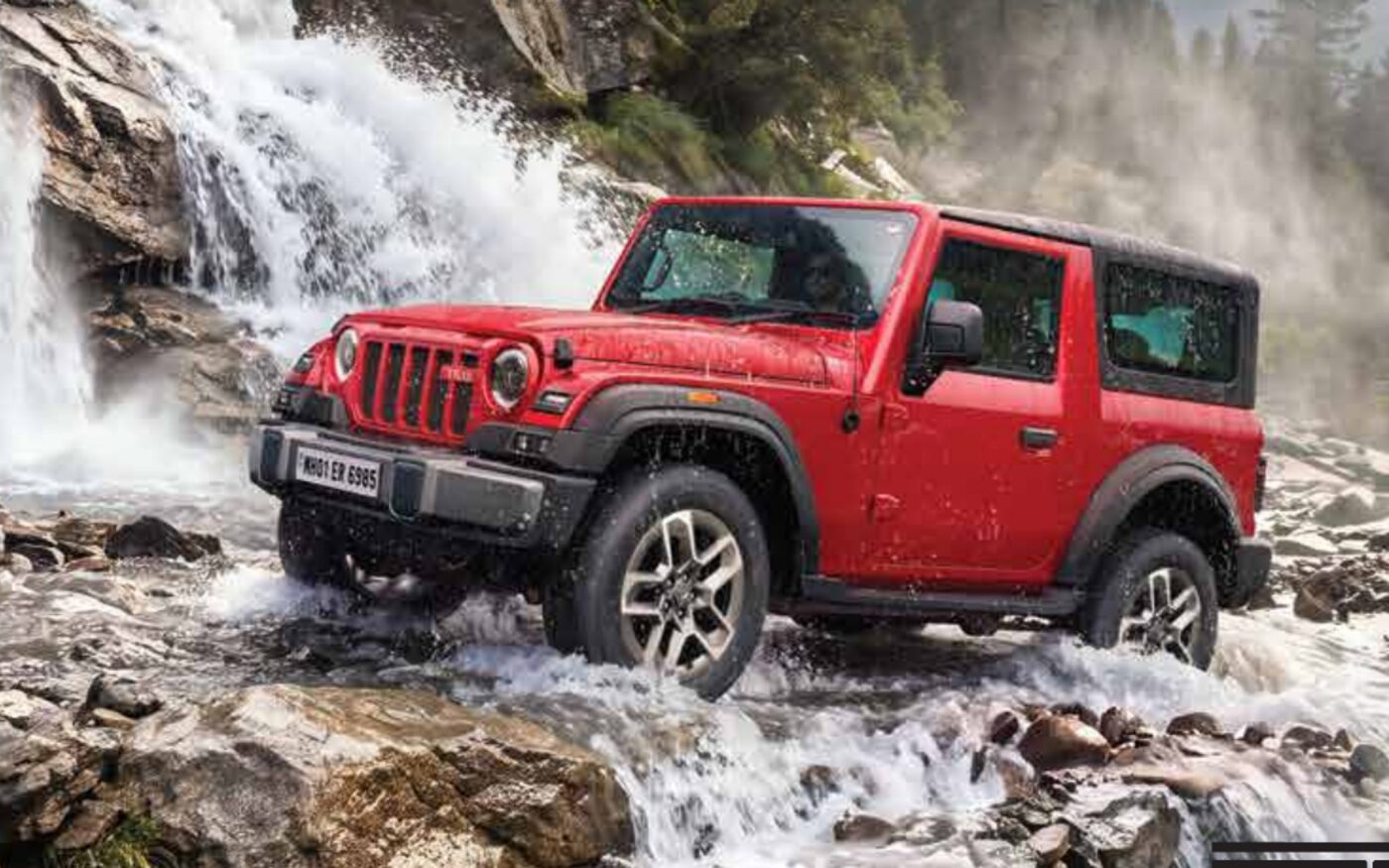
Mahindra Thar OG: 330 Nm, two doors you will regret, and no apology for either
The September 2026 facelift keeps everything that makes the Thar sell and everything that makes it impractical. If you are buying one as a family car, read the rear-seat paragraph twice.
- Ex-showroom
- ₹16.49 – 18.99 L
- Engines
- 2.0 petrol, 2.2 diesel
- Torque
- 330 Nm, both engines
- Drivetrain
- 2WD or 4WD
- Aug 2026 sales
- 10,464 — rank 16
What is good
- 330 Nm from both engines, and a proper four-wheel-drive system with low range
- Ladder-frame construction and real off-road ability, not a styling package
- Holds value unusually well for the segment
What is not
- Two doors — rear access means folding a front seat, every time
- A ladder frame rides and handles like one on a broken city road
- From ₹16.49 lakh, and a five-door Thar Roxx is right there
What the facelift changed
Mahindra refreshed the three-door Thar — the one they now call the Thar OG — in September 2026, with a new brochure dated the 17th. The changes are cosmetic and equipment-led: C-shaped daytime running lamps, LED tail lamps, R19 alloys on the higher trim, a larger touchscreen.
What did not change is the part that matters. It is still a body-on-frame vehicle with a transfer case, not a crossover with raised suspension. That distinction is the entire reason the Thar exists.
Two engines, the same torque
The mStallion 2.0-litre turbo petrol makes 119 kW — around 162 PS — and 330 Nm. The mHawk 2.2-litre diesel makes 111.9 kW, about 152 PS, and the same 330 Nm.
Choosing between them is not a performance decision, because the torque figure is identical and torque is what an off-roader uses. It is a running-cost and character decision: the diesel pulls from lower down and costs less per kilometre if you do distance; the petrol is quieter and cheaper to buy.
For most Thar buyers the diesel is the right answer, which is why Mahindra's own configurator opens on it.
| Spec | mStallion 2.0 petrol | mHawk 2.2 diesel |
|---|---|---|
| Max power | 119 kW (≈162 PS) | 111.9 kW (≈152 PS) |
| Max torqueour pick | 330 Nm | 330 Nm |
| Construction | Ladder frame | Ladder frame |
| Drivetrain | 2WD or 4WD | 2WD or 4WD |
Outputs from Mahindra's official Thar brochure dated 17 September 2026. PS figures converted from Mahindra's published kW.
What it costs
The ladder is short and readable. LXT to ZXT is ₹1,00,000 on the two-wheel-drive car and ₹99,500 on the four-wheel-drive one — near enough the same step either way.
Two-wheel drive to four-wheel drive is ₹1,50,500 on LXT and ₹1,50,000 on ZXT. That is the step worth thinking hardest about, and our view is that it is the one step you should not skip. A two-wheel-drive Thar has the ride and the doors of an off-roader without the ability, which is paying the costs and skipping the benefit.
One caveat on the table below, stated plainly: these are the diesel automatic prices, which is what Mahindra's booking flow exposes without entering it. Petrol and manual variants exist at different prices — ask your dealer for the full list rather than assuming these carry across.
| Variant | Drivetrain | Ex-showroom |
|---|---|---|
| LXT Dieselour pick | 2WD | ₹16,49,000 |
| ZXT Diesel | 2WD | ₹17,49,000 |
| LXT Dieselour pick | 4WD | ₹17,99,500 |
| ZXT Diesel | 4WD | ₹18,99,000 |
Diesel automatic variants, ex-showroom, read from Mahindra's own variant selection on 29 September 2026. Petrol and manual variants are offered at other prices — confirm the full list with your dealer.
The two doors, and who should walk away
This is the part a showroom will skip, so we will not.
The Thar OG has two doors. Anyone sitting in the back gets there by folding and sliding a front seat forward, then climbing over a high sill. Once there, the space is tight and the ride over the rear axle of a ladder-frame vehicle is firm. Doing that with a child seat, every day, is not a thing people keep doing cheerfully.
If your honest use is two adults plus occasional passengers, and you want the look and the capability, the Thar OG is a fine buy. If you have a family, Mahindra sells the five-door Thar Roxx, and that is the car you actually want. Buying the three-door and hoping the rear seat works out is the single most common expensive mistake in this segment.
The ride is the other thing to test rather than read about. A ladder frame is what makes the Thar good off-road and what makes it busy on a broken city road. Drive one over the worst surface near your home before you decide.
What we would tell a friend
If you want a Thar, buy the LXT Diesel 4WD at ₹17,99,500. Four-wheel drive is the point; the higher trim is not.
If you are buying it as the family's only car, do not. Look at the five-door Roxx, or at any of the monocoque SUVs at this money that will be better at every single thing except the one weekend a year you go off-road.
And be honest with yourself about that weekend. Most Thars never leave tarmac, which is fine — but if that is you, you are paying for a transfer case and a ladder frame in ride comfort every day, and it is worth knowing that is the trade you are making.
Want this for your shortlist?
We will go through your options and tell you which one we would buy, and what to skip.
Talk to an expertRead next
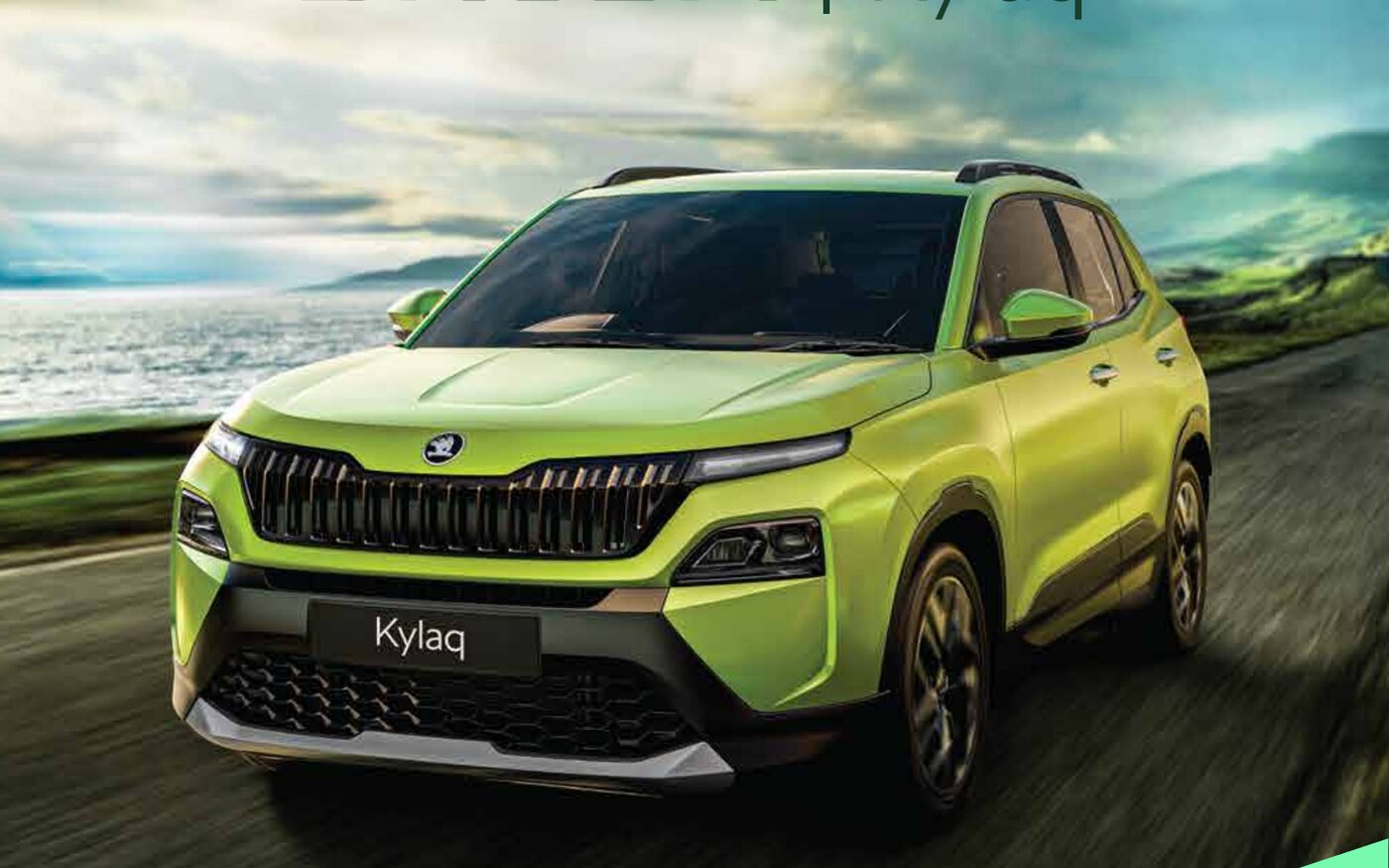
Skoda Kylaq: every variant gets the same 115 PS turbo
₹7.59 lakh buys the same 115 PS turbo fitted to the ₹12.75 lakh car. That is the opposite of how Indian ranges usually work, and it changes which variant you should be looking at.
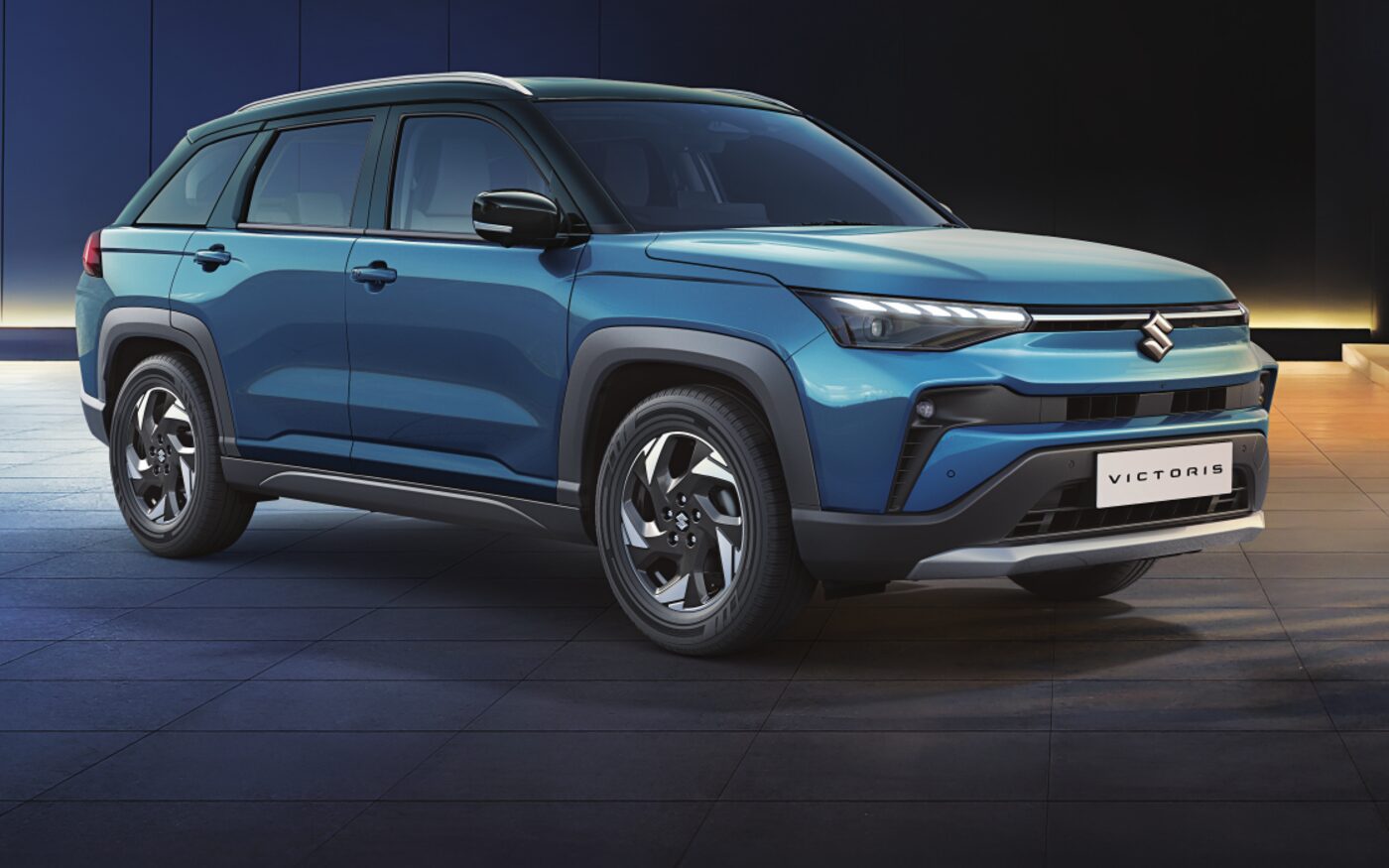
Maruti Victoris: the most complicated car Maruti has ever sold
Twenty-one variants, three powertrains, all-wheel drive, ADAS and a strong hybrid — from ₹10.50 lakh to ₹19.99 lakh. Maruti has built a Creta rival and priced it like one.